A livelier valley
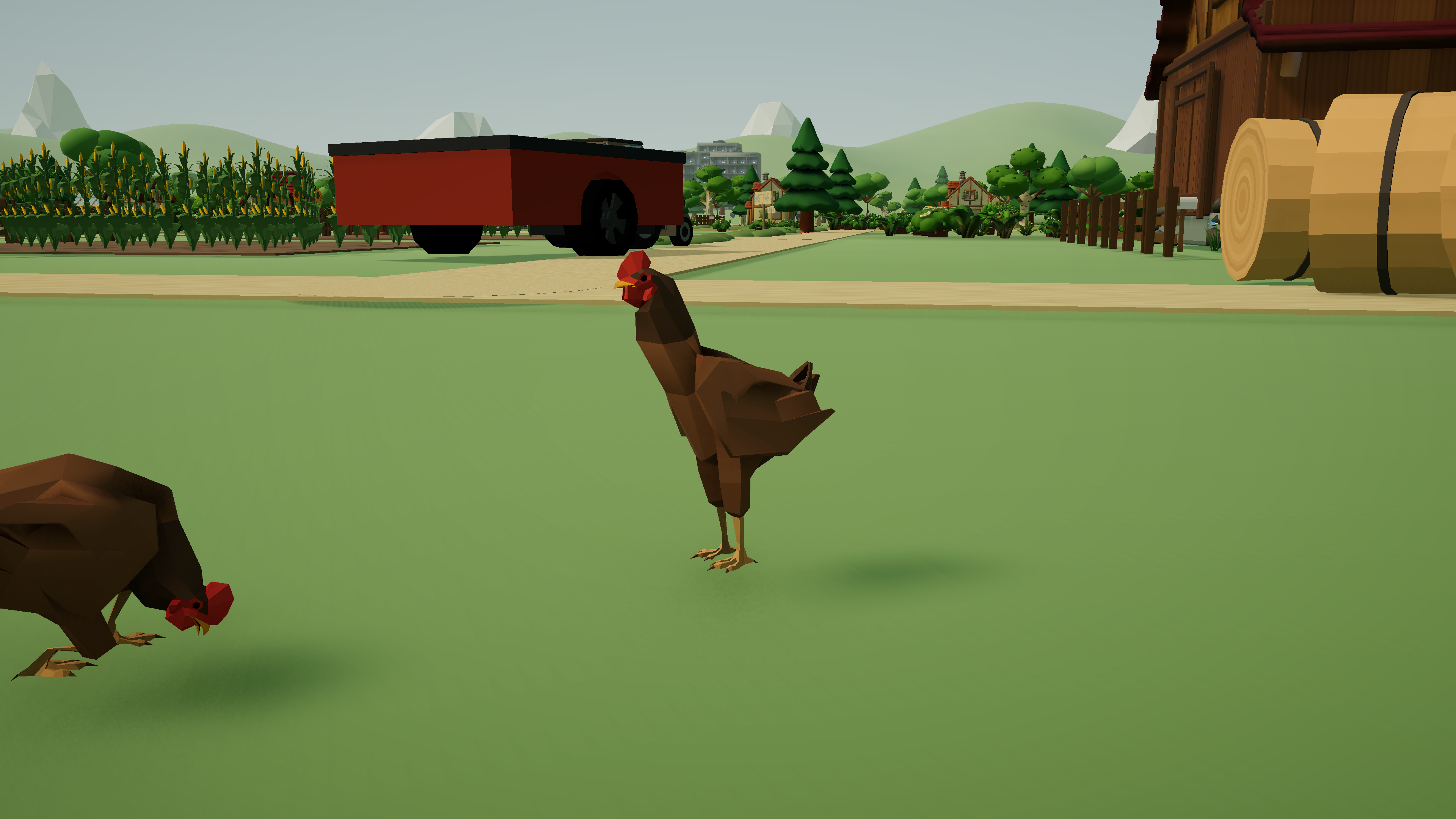
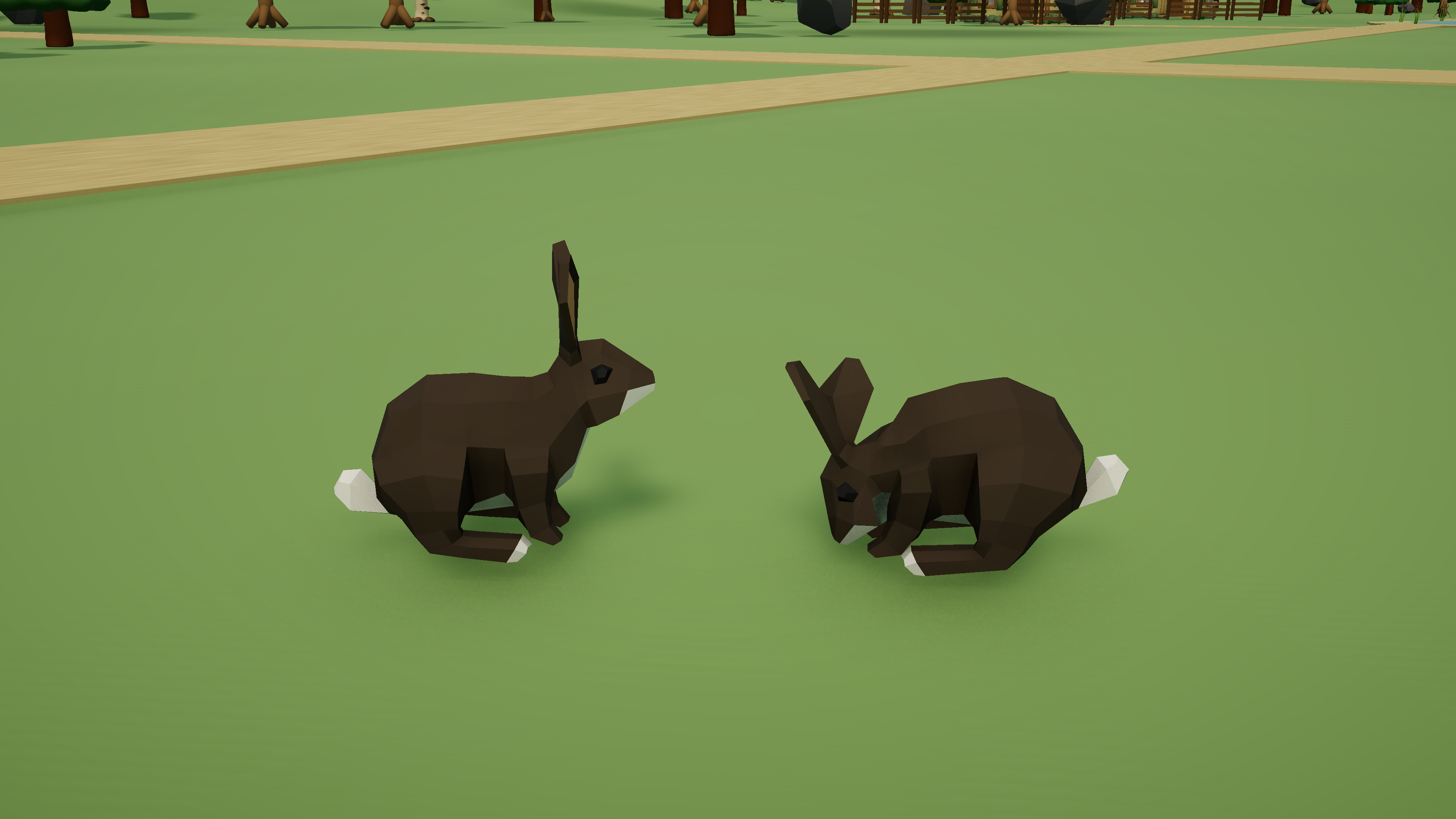
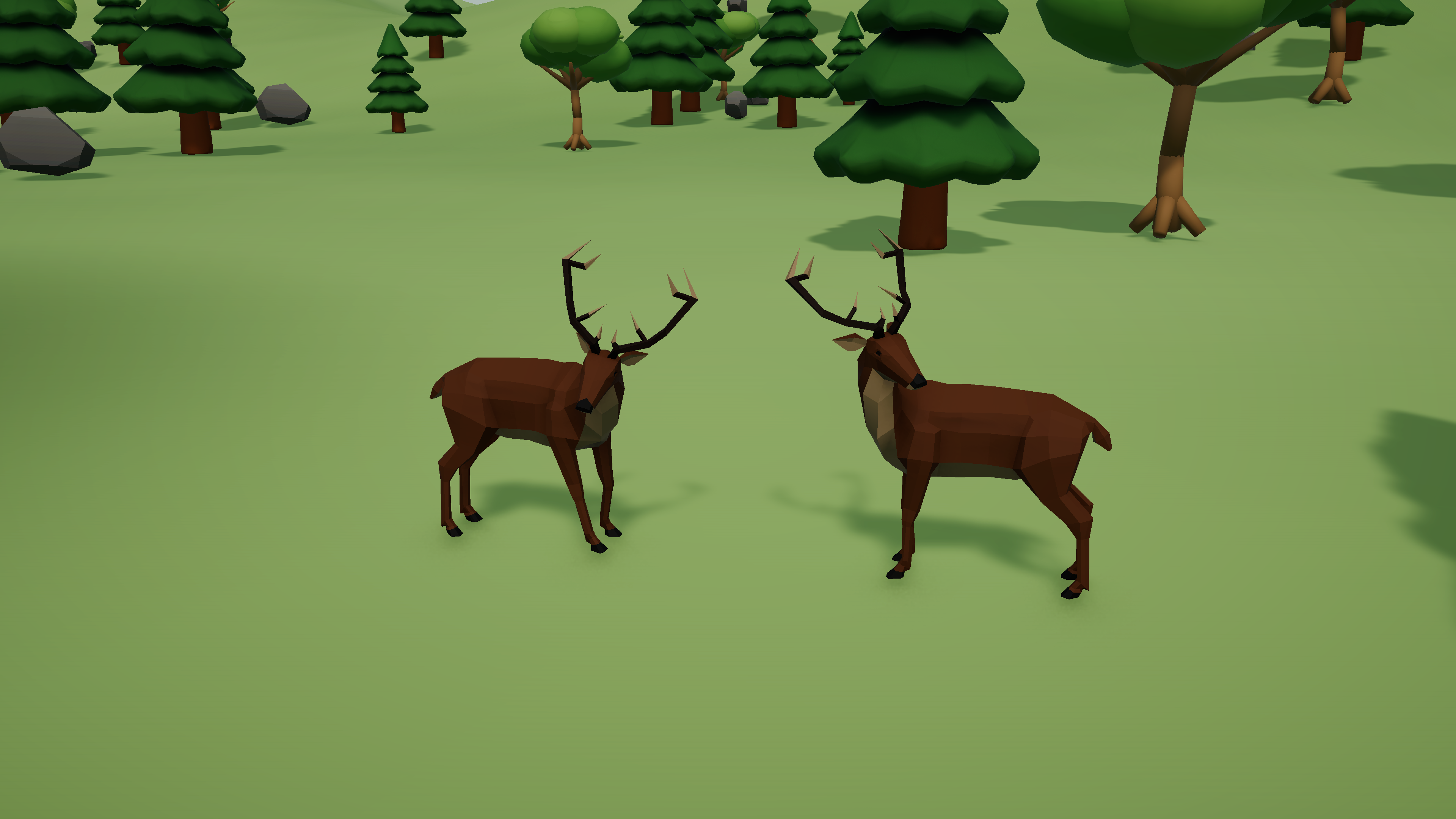
Meet the valley’s hens, rabbits and deer, up close. They roam and pause with company; pet companionship is now on the roadmap.
Full entry & measurements
What small lives can share a village? Three hens now wander beside the farm, two rabbits pause at the orchard and two deer share the northern clearing. The new wildlife milestone celebrates their independent wandering and peaceful same-species encounters: noticing, short following and foraging together. The earlier encounter record contains the behavior evidence; these new close photographs let us see the animals themselves. The photographs are actual 3840 × 2160 Unity Editor camera renders, taken on 17 October 2026 Europe/Zurich with the current game rigs, materials and scenery. They are labeled Editor photographs rather than standalone gameplay or generated artwork. An empty-resident public fixture advanced the existing animal presentation naturally, then paused for the camera. The selected rabbit and deer frames retain presentation clock 18.7952; the final hen profile follows a naturally occurring idle pose at clock 48.6885. No animal was repositioned, rescaled, posed by hand or retouched. Lower camera viewpoints and the existing afternoon viewing preset make the subjects readable. The offscreen camera omits the HUD. These stills show appearance, not motion, simulation acceptance or pet behavior. Pet companionship is now a future milestone: “All animals can be pets.” Every animal species introduced into Habitat should be eligible for a lasting companion bond. The planned acceptance includes befriending, naming, simple care, following, an explicit home-access choice and persistence through pause and reload. The simulator must validate those actions. This is planned work; the current animals remain ambient wildlife. The existing resident-conversation priority and numbered delivery plan are preserved. Measurement snapshot, 17 October 2026: (1) three selected close photographs, each 3840 × 2160, measured directly from their reviewed PNG headers. (2) Eight individually reviewed camera frames remain in four photography iterations: the first sunset studies, daylight pairs, a lower hen attempt and the final raised-head profile. Only the selected three new originals enter the internet edition. (3) The game still contains seven animal instances across three supported species, counted from the current public presentation observation; no new species or mesh was added. (4) All 78 frozen runtime/source-asset hashes matched the delivered encounter build before photography; the final handoff matched all 78 again. The ordinary saved-world readback was exactly unchanged and the native game remained paused. Camera-only work does not create a new game-build claim. Private camera/observation receipts retain exact positions, angles, fields of view, clocks and source identities. Source identity is editor-animal-encounters-9a5ec5c51888, using the licensed polyperfect 4.1.1 animal selection d2ecfdb2b719. No original AI generation prompt exists for these third-party animals, and licensed meshes and animations remain withheld from public downloads. The latest World journal card and animal-library posters use the new portraits; the native village photos retain the actual delivered player identity. Historical native and Editor captures keep their own dates and conditions. The first sunset studies were too dark and loosely framed. The initial hen views hid its face; the final camera moved to the side after its existing idle animation had naturally raised its head. Those earlier frames remain individually approved local history, not the current showcase. The initial capture command also rejected a path outside the Unity project; its later temporary imported output was moved to private staging, and subsequent camera bytes were written directly to private capture storage. No raw capture is left as a game asset. The photography and planning work changes no movement controller, save format, model settings or failed Needle gate. The existing 32 encounter checks and native nine-completed-encounter/three-following observation remain historical results from the preceding implementation increment. They were not rerun or reassigned to these photographs. The next design question is how an animal becomes a companion while retaining its own safe routine. Publication delivery and live verification are recorded separately by the website-sync receipt. Website review, 17 October 2026: the three selected portraits now have nine reviewed responsive WebP variants; the preview manifest retains 350 sources and 880 variants including history. The source/poster/public/language boundary scope passed 39 checks in 0.45 seconds; page/sync checks passed 78 in 1.95 seconds. After replacing generic rendered-study image alternative text with the actual authored description, page/language checks passed 36 in 0.92 seconds and the actual Node journal helpers passed 30/30. Scopes overlap and are not added into a full-project total. These are website results, not animal/pet acceptance. Actual 1440 × 1000 browser review confirmed the newest featured wildlife card, all three close-up poster cards under the 3-of-17 Poster only filter, no model viewer and no horizontal overflow. At 390 × 844, the German chapter decoded all three 480-pixel WebPs with translated descriptions, and the roadmap retained its explicit planned-only heading and pet milestone. The ordinary save was exactly unchanged after photography; all 78 frozen native source/asset hashes still matched. Local-only website evidence preserves 20261016T234210451000-a36b6b418728 on animal-showcase-website-70800bd1b50bd0af, 20261016T234228442000-58b4fd7b3c7b on animal-showcase-website-bd36594ef57c9973, 20261016T234242441000-d70ba0bb8f23 on animal-showcase-website-61d20f4684385a53, 20261016T234319424000-1de9c24a9bbe on animal-showcase-website-815c47553642e9c6. Each staged image/metadata pair was inspected and individually approved; the roadmap screenshot records its visible introduction, while the separate DOM check verified the pet row below it. Those source/page hashes are retained even after later journal refreshes. Publication and live verification are separate receipt evidence.